
Basements, laundry rooms and lower levels
Basement Floor Epoxy in Sioux Falls, SD
A bright, easy-clean floor over concrete we test for moisture and repair first.
- Free on-site estimate with a slab moisture test
- Itemized written quote before any work begins
- Every floor diamond ground and repaired before coating
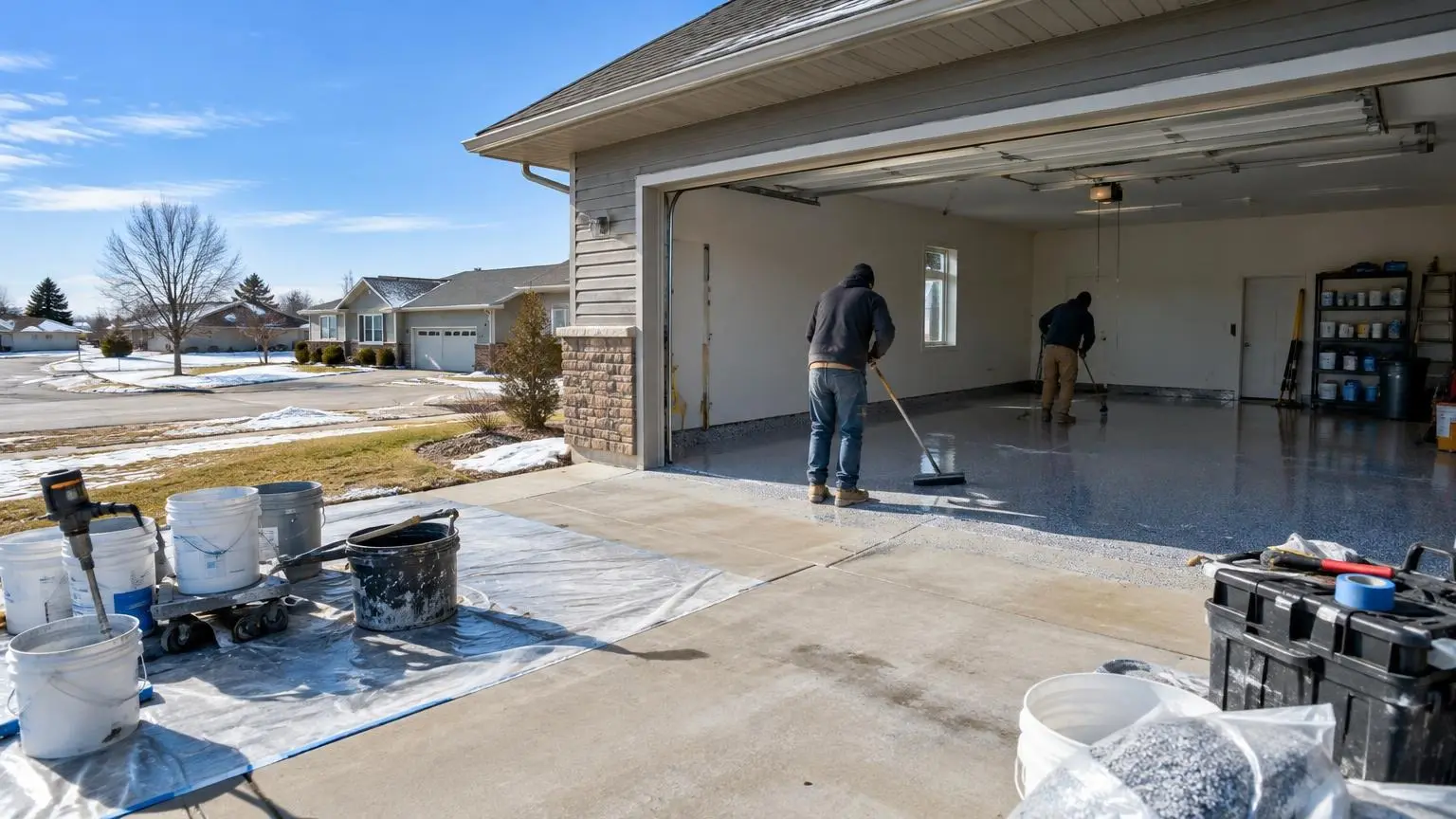
Coating a Basement Slab the Right Way
Basement floor epoxy turns a gray, dusty slab into a sealed floor you can wash. In Sioux Falls, many homes have full basements, and lower levels get used as family rooms, gyms, playrooms, laundry rooms and storage. A coating makes those spaces brighter and easier to keep clean. It also has to deal with something a garage floor rarely does: moisture coming up through the concrete from the ground below.
Why moisture comes first
A basement slab sits on soil, and water vapor moves up through concrete. If a coating seals the top and vapor keeps pushing, the coating can blister or lift. Summers make it worse. Wikipedia lists Sioux Falls' average relative humidity near 65% in June and July and about 68% in August. The EPA advises keeping indoor humidity below 60% and notes that condensation forms when warm, humid air meets a cold surface. A cool basement slab in July is that cold surface.
We test the slab before we recommend a system. A dry slab gets a standard primer. A slab with moderate vapor gets a moisture-tolerant primer, which Bob Vila puts at about $1 more per square foot. A slab with standing water, active leaks or efflorescence that keeps returning needs the water problem fixed first, and we will say so.
Radon and finished basements
South Dakota's Department of Agriculture and Natural Resources places the eastern part of the state in EPA radon Zone 1, the highest potential, and says testing is the only way to know a building's level. A Dakota News Now report citing the American Lung Association lists an estimated mean of 6.5 pCi/L in Minnehaha County, above the EPA action level of 4. A floor coating is not radon mitigation. If you are finishing a basement, test first. If a mitigation system goes in, we coat around the suction point.
Basement systems we install
- Solid color epoxy: a clean, bright floor for storage, laundry and utility rooms.
- Flake epoxy: chips broadcast into the base for texture and dirt hiding in gyms and playrooms.
- Metallic epoxy: a poured, swirled finish for family rooms, bars and theaters.
- Clear sealed concrete: for ground concrete you want to keep the look of.
Signs a basement slab needs work before coating
- White powdery deposits on the concrete or the walls
- Dark damp spots after rain or in humid weeks
- Old carpet glue, tile mastic or paint
- Cracks that have widened or that let water in
- A musty smell that stays after running a dehumidifier
Removing old floor coverings
Many lower levels have carpet, vinyl or tile on them now. Adhesive and mastic have to be ground off before a coating will bond. If the floor has old vinyl tile, especially older 9-inch tiles, have the tile and mastic tested for asbestos before anyone grinds it.
Living with a coated basement
Keep a dehumidifier running in humid months, wipe up spills, and put felt pads under furniture. Area rugs are fine once the coating has fully cured.
What This Covers
Basement work starts with testing and prep, then the coating.
Moisture testing
The slab is tested before we pick a primer and system.
Moisture-tolerant primers
Primers made for slabs with moderate vapor coming through.
Adhesive and coating removal
Carpet glue, mastic and old paint ground off down to sound concrete.
Crack repair
Non-structural cracks filled so they do not show through the finish.
Finish choices
Solid color, flake, metallic or clear, chosen for how the room is used.
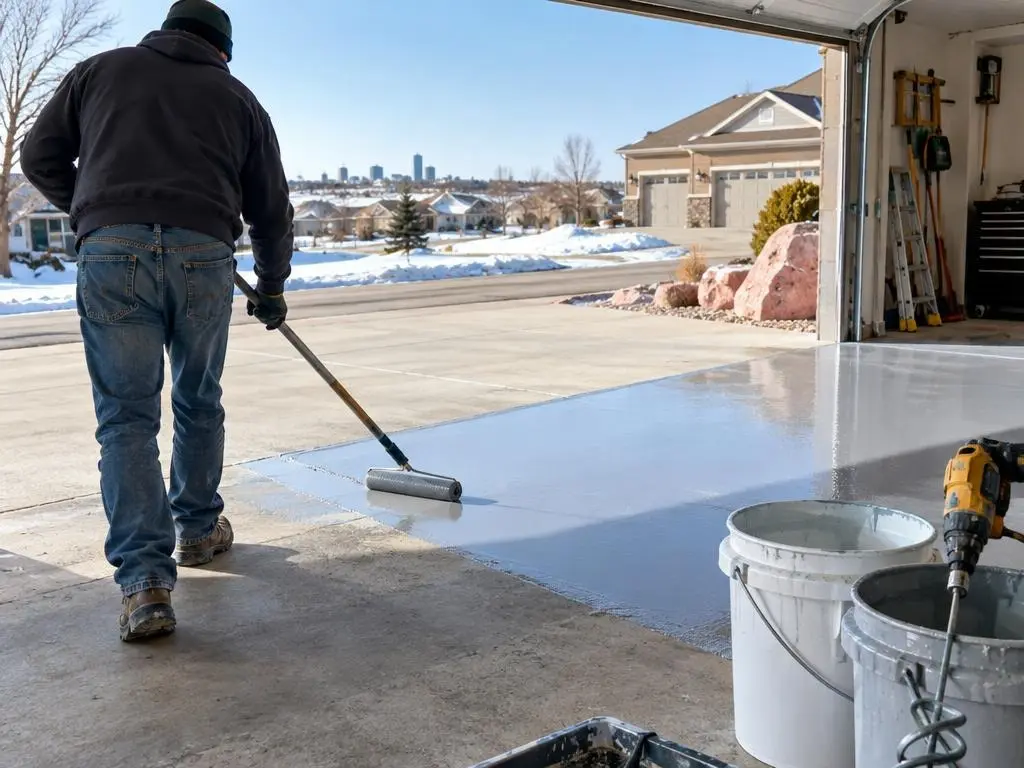
Typical Basement Floor Epoxy Costs
| Item | Published range |
|---|---|
| Epoxy, installed, per square foot | $4 to $10 |
| Basement floor, 300 to 2,000 sq ft | $1,200 to $20,000 |
| Moisture and hardness testing | $50 to $300 |
| Moisture barrier, if needed | about $1 more per sq ft |
| Patching cracks or chips | $25 to $250 |
| Concrete resurfacing for badly worn slabs | $3 to $7 per sq ft |
National ranges from HomeGuide (epoxy, polyaspartic testing and resurfacing) and Bob Vila (moisture barrier and patching). Moisture, old coverings and repairs move the total. Your written estimate is the price.
How It Works
1. Test and inspect
We test moisture, check cracks and note any old flooring or adhesive.
2. Remove and grind
Old coverings come off and the slab is diamond ground.
3. Prime and repair
Cracks are filled and the right primer goes down for the moisture level.
4. Coat and cure
The chosen system is applied, and we tell you when to bring furniture back.
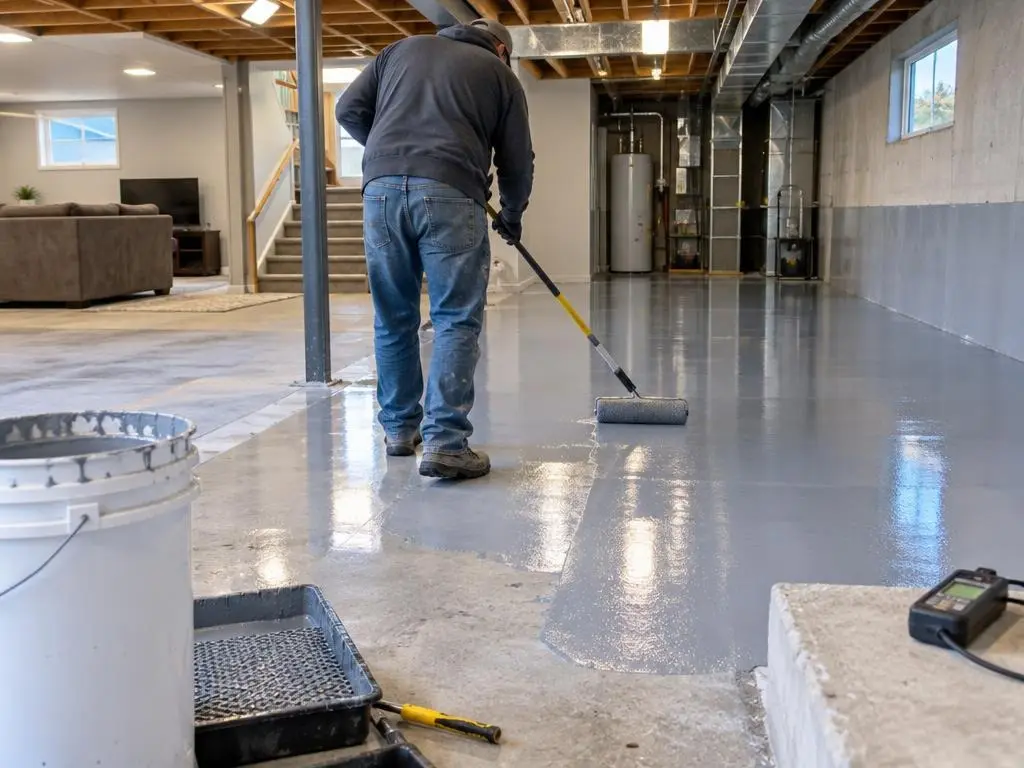
Basement Floor Epoxy Questions
Can you epoxy a damp basement floor?
Only after testing. Moderate vapor can be handled with a moisture-tolerant primer. Standing water or active leaks need to be fixed first, or the coating will fail.
How much does it cost to epoxy a basement floor?
HomeGuide lists $1,200 to $20,000 for basements of 300 to 2,000 square feet, which is its $4 to $10 per square foot range. Removing old flooring and moisture control add to that.
Is epoxy cold underfoot in a basement?
It feels like the concrete under it, so it is cool. Area rugs work well on a cured coating, and many people add them in sitting areas.
Does epoxy stop radon?
No. A coating seals the surface but is not a mitigation system. Test for radon and install mitigation if needed, then coat.
Basement Floor Epoxy Service Areas
- Epoxy Flooring in Sioux Falls, SD
- Epoxy Flooring in Brandon, SD
- Epoxy Flooring in Harrisburg, SD
- Epoxy Flooring in Tea, SD
- Epoxy Flooring in Hartford, SD
- Epoxy Flooring in Crooks, SD
- Epoxy Flooring in Renner, SD
- Epoxy Flooring in Dell Rapids, SD
- Epoxy Flooring in Baltic, SD
- Epoxy Flooring in Garretson, SD
- Epoxy Flooring in Colton, SD
- Epoxy Flooring in Humboldt, SD
- Epoxy Flooring in Valley Springs, SD
- Epoxy Flooring in Lennox, SD
- Epoxy Flooring in Worthing, SD
- Epoxy Flooring in Canton, SD
- Epoxy Flooring in Chancellor, SD
- Epoxy Flooring in Beresford, SD
- Epoxy Flooring in Montrose, SD
- Epoxy Flooring in Luverne, MN
- Epoxy Flooring in Larchwood, IA
- Epoxy Flooring in Inwood, IA
Get a Basement Floor Epoxy Estimate
Free on-site estimates for basement floors in Sioux Falls, moisture test included.